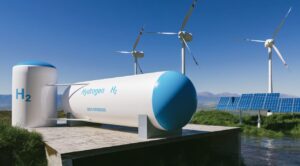
Indian States Accelerate Development of Green Hydrogen Initiatives
India is witnessing a significant surge in the development of green hydrogen initiatives as various states ramp up efforts to establish themselves as leaders in this emerging sector. With the global push for cleaner energy sources, state governments are recognizing the potential of green hydrogen to not only meet domestic energy demands but also to position India as a key player in the international renewable energy market. This article explores the recent initiatives taken by Indian states, the technological advancements driving these efforts, and the broader implications for India’s energy landscape.
State Initiatives and Policy Framework
Several Indian states have announced ambitious plans to promote green hydrogen production and usage. For instance, Gujarat, a frontrunner in renewable energy, has unveiled a comprehensive policy aimed at attracting investments in green hydrogen production and infrastructure. The state government has set a target of generating 1 million tons of green hydrogen by 2030, with incentives for companies to establish production facilities.
Similarly, Rajasthan has launched a green hydrogen policy that encourages the use of solar power for hydrogen production, capitalizing on its abundant sunlight. The state government aims to create a conducive ecosystem for green hydrogen by investing in research and development, as well as establishing a hydrogen technology park.
Other states like Maharashtra and Andhra Pradesh are also formulating policies to support green hydrogen initiatives. These policies are not only aimed at boosting local economies but also at meeting national targets set forth in India’s commitment to achieve net-zero emissions by 2070.
Technological Advancements and Infrastructure Development
The development of green hydrogen is closely tied to advancements in electrolysis technology, which is the process used to produce hydrogen from water using renewable energy sources. Companies and research institutions in India are working on improving the efficiency and reducing the costs associated with electrolysis.
One notable project is the collaboration between Indian Oil Corporation and the Indian Institute of Technology (IIT) to enhance the efficiency of alkaline electrolyzers, a common technology used for hydrogen production. The aim is to achieve grid parity for hydrogen production, making it a viable alternative to fossil fuels.
Alongside technological advancements, infrastructure development is crucial for the success of green hydrogen initiatives. States are investing in the establishment of refueling stations and pipelines to facilitate the distribution of green hydrogen. This infrastructure is essential for sectors such as transportation, where hydrogen fuel cells can provide a clean alternative to traditional fuels.
Economic and Environmental Implications
The shift towards green hydrogen has significant economic implications for India. It is expected to create thousands of jobs in manufacturing, research, and infrastructure development. Furthermore, by reducing dependence on imported fossil fuels, green hydrogen can enhance energy security and stabilize local economies.
From an environmental perspective, the potential reduction in greenhouse gas emissions is substantial. Green hydrogen, produced using renewable energy sources, offers a cleaner alternative to gray hydrogen, which is derived from fossil fuels. With India’s commitment to enhancing its renewable energy capacity to 500 GW by 2030, the integration of green hydrogen into the energy mix is a critical step towards achieving sustainability goals.
Challenges and Future Outlook
Despite the promising developments, several challenges remain. The current high costs of production and the need for significant investments in infrastructure are hurdles that need to be addressed. Moreover, there is a need for standardized regulations and frameworks to ensure the safe and efficient production and distribution of green hydrogen.
As states continue to develop their green hydrogen strategies, collaboration between the government, industry stakeholders, and research institutions will be crucial. The central government’s National Hydrogen Mission, launched in 2021, aims to facilitate this collaboration and provide a unified direction for green hydrogen development across the country.
The acceleration of green hydrogen initiatives across Indian states marks a pivotal moment in the country’s energy transition. With robust policies, technological advancements, and a focus on sustainability, India is well-positioned to harness the potential of green hydrogen. As these initiatives unfold, they promise not only to bolster the economy but also to contribute significantly to global efforts in combating climate change. The journey towards a hydrogen economy may be fraught with challenges, but the potential rewards make it an essential pursuit for a sustainable future.