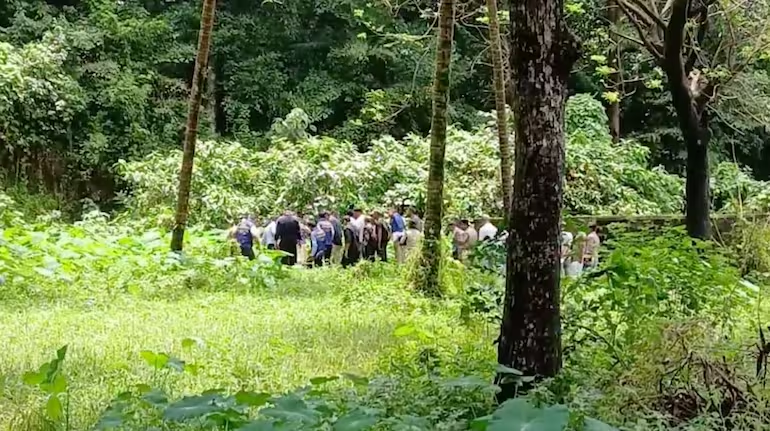
The recent claims about a mass burial in Dharmasthala have raised unsettling questions and sparked intense public scrutiny, but what exactly has been discovered—and more importantly, what remains undiscovered—holds the key to unraveling the truth. Authorities have so far confirmed the existence of several gravesites, but doubts linger about the scale and nature of the burials, leaving many in uncertainty.
Initial investigations revealed shallow graves containing unidentified remains, but the evidence is far from conclusive. Local officials emphasized the need for a thorough forensic examination to determine the origins, circumstances, and timeline of the burials. The ambiguity surrounding the findings has fueled speculation and conspiracy theories, making the case a focal point of public interest.
Forensic experts are now at the forefront, tasked with piecing together the puzzle through scientific analysis. Techniques such as DNA profiling, carbon dating, and forensic anthropology are expected to shed light on who the deceased were and how they died. This critical phase could either validate the claims of mass burials or dispel misinformation, clarifying a narrative fraught with confusion.
The importance of forensic science in this case cannot be overstated. It provides an objective lens that transcends hearsay, enabling law enforcement agencies and the public to differentiate facts from rumors. Until these meticulous examinations are complete, many questions will remain unanswered, prolonging the suspense.
As the investigation unfolds, the eyes of the nation remain fixed on Dharmasthala, awaiting definitive answers. The role of forensics offers a possibility not just of closure, but of justice and truth in what could be one of the most significant and sensitive revelations in recent times.


